
Published October 4, 2026
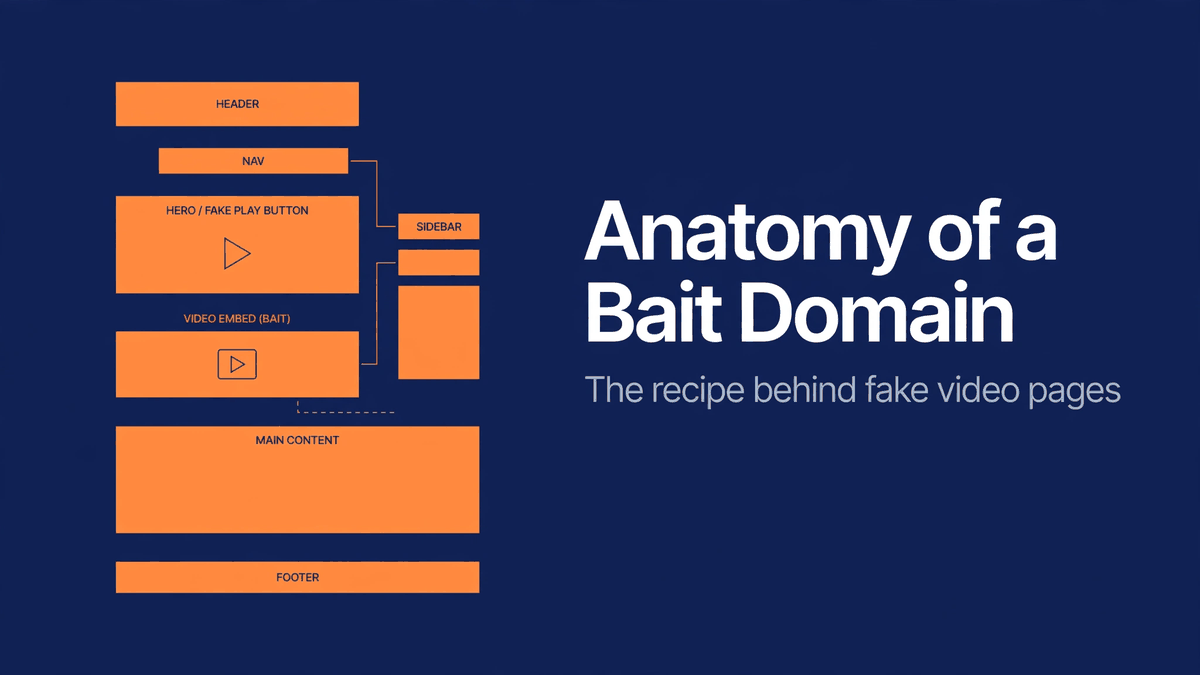
Anatomy of a Bait Domain
Ever wondered how a domain like "19minute34second.online" comes to exist? It's not random — it's a manufactured product with a specific recipe. Here's the anatomy.
Ingredient 1: a trending keyword
Everything starts with a trending search — a viral clip, a celebrity name, a controversy. Operators monitor Google Trends, TikTok, and X for spikes. Speed matters: the first pages to target a fresh trend get the traffic.
Ingredient 2: a precise duration
"19 minute 34 second." The precision is fake but effective — it mimics how real video metadata looks in search results. Different operators use different numbers (11:08 and 23:47 are other classics), but the function is identical: look like a specific file, rank for "full video" searches.
Ingredient 3: a cheap domain
Bulk-registered .online, .store, and .xyz domains cost next to nothing. Operators register them by the hundred, each targeting a trend. When a trend dies, the domain is abandoned — which is why these sites always look half-finished.
Ingredient 4: the template
Every bait page has the same skeleton: dramatic headline, fake or non-functional video player, a few paragraphs of keyword-stuffed text, and the payload — a download button or redirect chain. The text is interchangeable; only the trending keyword changes.
Ingredient 5: the monetization
Traffic becomes money three ways: display ads on the page itself, pay-per-install from the APK download button, and redirect chains that bounce you through affiliate links. A single viral trend can make a template network thousands of dollars before it fades.
Why we're dissecting our own kind
Because sunlight is the fix. The bait economy only works while visitors don't recognize the pattern. Now you do. Back to the main explainer.